
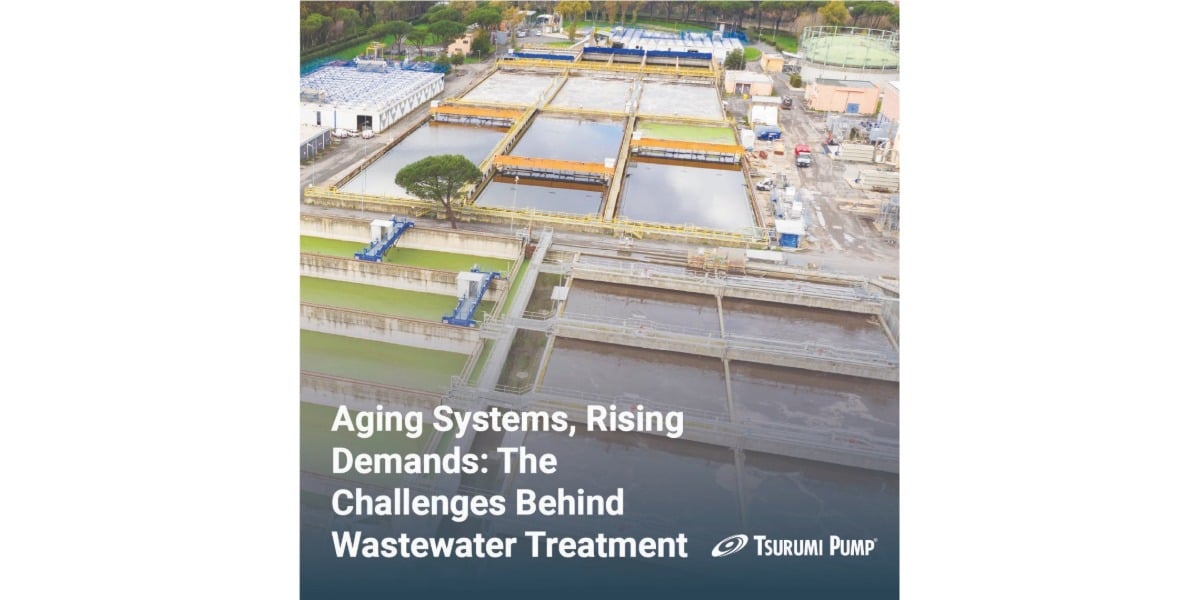
Across the world, wastewater treatment plants play a vital role in protecting public health and the environment. According to the Environmental Protection Agency, wastewater facilities process approximately 34 billion gallons of wastewater every day. A significant amount of the wastewater industry’s infrastructure was constructed decades ago, leaving operators to face challenges associated with aging systems, escalating costs, and growing demand from expanding populations.
Aging Infrastructure Meets Modern Demand
Many wastewater treatment plants were designed to last 40 to 50 years, however, plants often operate well beyond that timeframe. Aging equipment and infrastructure are at risk of failure, leaks, blockages, and overflows. Replacing or modernizing these systems requires financial investment, often increasing spending for utilities and taxpayers. While repairs may keep operations running, long-term reliability may require investment in infrastructure and equipment upgrades.
Capacity Overload Due to Rising Populations
Population growth and urban development has pushed many facilities beyond their intended capacity. Plants built for smaller communities are now tasked with serving far larger populations, increasing vulnerability to mechanical failures and compliance violations. Solutions include upgrading equipment and exploring decentralized treatment systems that reduce the burden on overextended facilities. Wastewater treatment plants may also encourage water conservation if necessary.
Tougher Rules Push Plants to Adjust Quickly
Wastewater plants must navigate evolving regulatory requirements. Stricter limits on nutrients and new standards for emerging contaminants have raised the bar for treatment quality. Compliance often requires monitoring, training, and the potential for equipment upgrades, adding additional complexity to facilities.
The Price of Clean Water
One pressing issue in the wastewater sector is in regard to financials. A $110 billion funding gap was reported in 2024, with an estimated increase to $194 billion by 2030. For many municipalities, the cost of building new facilities or overhauling existing ones is out of reach. To bridge the gap, utilities are looking toward phased upgrades and public-private partnerships.
Building Stronger and More Sustainable Treatment Plants
Addressing these challenges will require a balance of investment, innovation, and long-term planning. Strategic investment in infrastructure renewal and treatment technologies will allow plants to become more resilient in the long run. By addressing funding gaps and embracing innovation, communities will not only have to maintain wastewater treatment facilities, but transform them into stronger, more sustainable systems that will continue to serve future generations.