
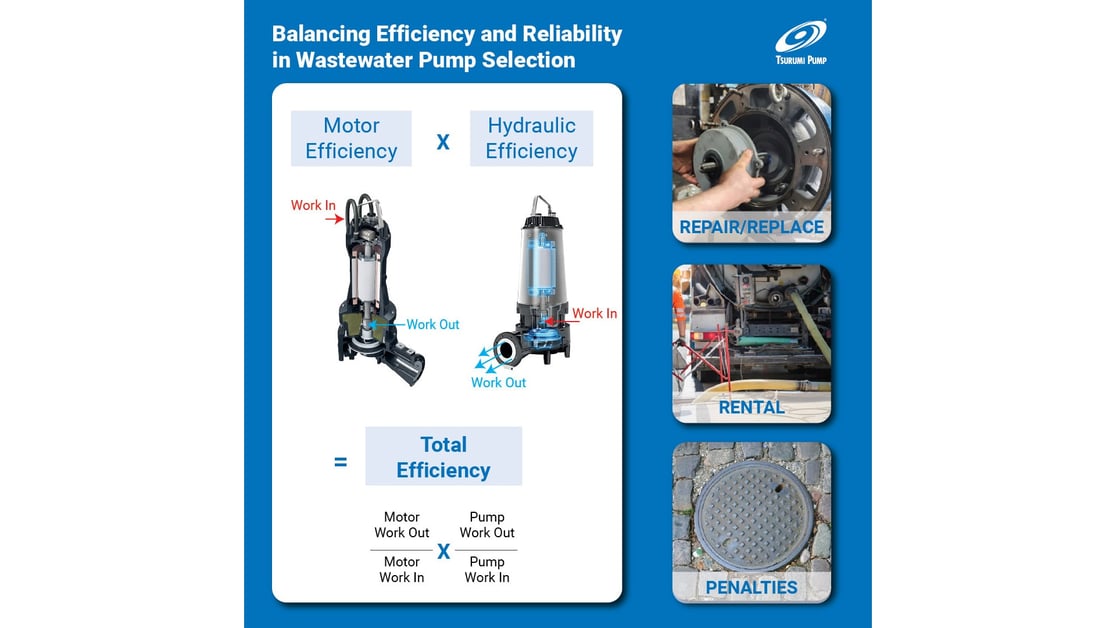
In wastewater and industrial dewatering applications, selecting the proper pump design and impeller configuration is critical to achieving long-term reliability. Different applications present different challenges, including fibrous wipes, abrasive grit, sludge, and corrosive materials. Matching the pump and impeller design to the operating environment helps reduce clogging, minimize wear, and improve overall system performance.
One of the most important first steps in pump selection is understanding the application itself. Municipal wastewater, sludge handling, mining, and construction dewatering all involve different solids and operating conditions. Reviewing previous pump failures can also provide valuable insight into whether clogging, abrasion, or corrosion is the primary issue affecting reliability. Considering the entire pumping system — including upstream conditions and downstream equipment — can also help improve long-term performance and reduce unexpected failures.
While hydraulic efficiency remains an important consideration, reliability often has a greater impact on overall lifecycle cost. A highly efficient pump that frequently clogs or requires maintenance can quickly erase potential energy savings. In demanding wastewater applications, downtime may lead to repair costs, rental equipment, operational disruptions, or even environmental penalties.
For applications involving wipes, rags, and fibrous materials, cutter, grinder, and chopper-style impellers provide a reliable solution by reducing solids before they pass through the pump. Although these designs may reduce hydraulic efficiency due to added drag, they significantly improve resistance to clogging and help protect downstream piping systems.
Vortex impellers are often preferred for applications containing large solids or abrasive materials. Because the impeller is recessed away from the pump inlet, solids can pass through with less direct contact against wear components. While vortex designs typically operate at lower efficiency, they can greatly improve reliability and wear life in difficult operating environments.
Material selection also plays a major role in pump longevity. High chrome iron alloys offer excellent abrasion resistance in slurry and dewatering applications, while stainless steel may be better suited for corrosive environments. Balancing hydraulic efficiency, solids handling capability, material selection, and long-term reliability is essential for achieving dependable pump performance in demanding wastewater applications.
Download the article here.