
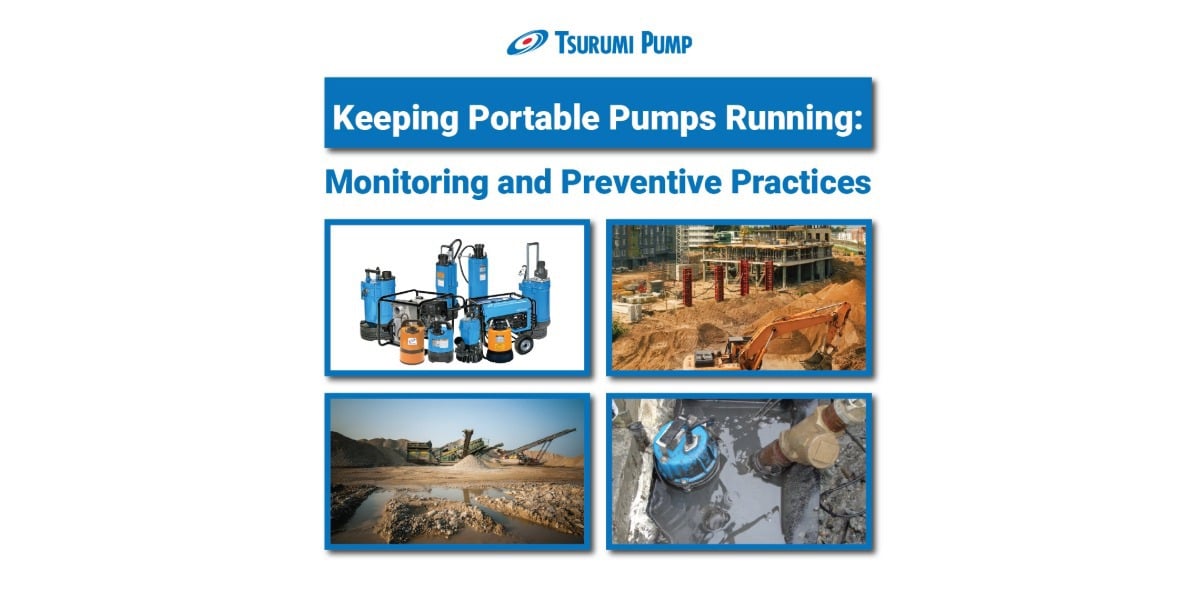
Portable pumps are relied upon across construction, municipal, and rental applications where fast deployment and dependable performance are essential. Due to the nature of the portable industry, pumps are often subjected to an increased amount of wear and tear. This further requires routine monitoring and preventative maintenance for successful operation.
Within portable pump applications, one of the most frequent service calls occurs when a pump stops moving water. In many cases, the cause is typically debris clogging the strainer. When debris collects around the pump strainer, water flow into the pump can be restricted, reducing performance or stopping the pump altogether.
Before requesting service, operators can perform a few simple troubleshooting steps. It is recommended to first disconnect the pump from its power source. After, the operator can remove the strainer and inspect if debris is clogging the suction or discharge. It is also important to check the cable for any cuts, gouges, or soft spots that may be preventing the pump from properly operating.
By regularly monitoring performance, operators can flag irregularities before they lead to pump failure. When pumping abrasive fluid, increased monitoring is critical. Common repairable issues include electrical irregularities, shaft wear, mechanical seal failure, impeller imbalance, and damaged bearings. If pumping capacity decreases significantly, it may indicate wear or another issue that requires complete inspection. A drop in performance of 15-20% is generally a good indicator that the pump should be serviced.
Preventative maintenance practices will help to extend pump life. By following the manufacturers’ recommendations outlined in the product manual, operators can ensure consistent performance. Preventative practices that will help to keep portable pumps running include regular oil checks, flagging any unusual leaks or noises, and monitoring voltage/amperage. Pumps should never be lifted by the power cable or discharge hose; instead, a rope or lifting cable should be used to prevent damage to the connections.
By performing regular inspections, proactively addressing debris buildup, and following recommended handling practices, operators can help to prevent common portable pump issues.
Download the story here.