
When selecting a portable submersible pump, the purchase price is often the first specification customers compare. However, in abrasive dewatering applications, the true cost of ownership extends well beyond the initial investment. Material selection, component durability, and long-term performance all play significant roles in determining how reliably a pump performs throughout its service life.
One area where engineering design can make a measurable difference is the impeller. While many portable pumps utilize conventional cast iron impellers, Tsurumi's HS2.4S features a urethane rubber impeller specifically selected for its superior resistance to abrasive wear.
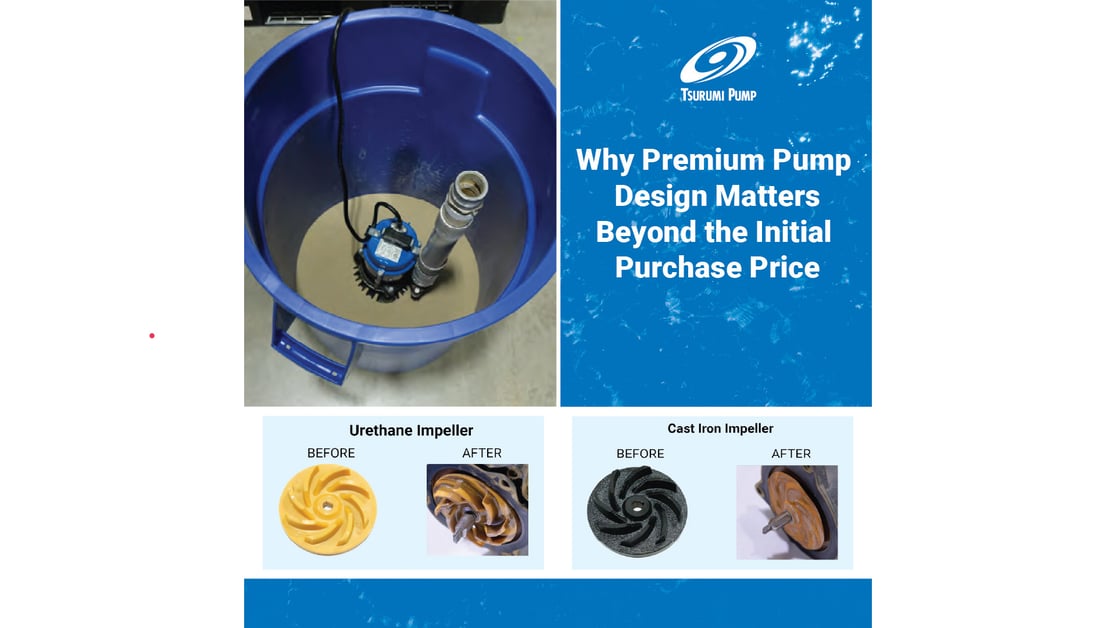
To evaluate the performance difference, Tsurumi engineers conducted a controlled endurance test using two identical pumps equipped with geometrically identical impellers—one manufactured from urethane rubber and the other from cast iron. Both pumps operated continuously for 200 hours in a 15% silica sand slurry, creating an extremely abrasive environment representative of demanding jobsite conditions.
The results demonstrated a significant difference in long-term performance. After the test, the urethane impeller maintained essentially the same hydraulic performance as before testing, while the cast iron impeller experienced an average performance reduction of 72 percent due to wear.
Visual inspection further reinforced the findings. The cast iron impeller showed extensive erosion, with its vanes nearly worn away, whereas the urethane impeller retained its original profile with only minor wear patterns visible.
For contractors, rental fleets, and municipalities operating in abrasive environments, this engineering difference translates into practical benefits. A pump that maintains its designed hydraulic performance requires less maintenance, reduces unexpected downtime, and minimizes the need for replacement components. Instead of gradually losing pumping capacity as internal components wear, the pump continues to operate near its original performance level throughout a longer service life.
The purpose of the testing was not to suggest that cast iron is an unsuitable impeller material. Cast iron remains a proven and economical solution used throughout the pump industry. However, for applications involving sand, grit, or other abrasive solids, selecting a more wear-resistant impeller material can significantly reduce lifecycle costs and improve operational reliability.
Although premium components may increase the initial purchase price, the long-term savings achieved through reduced maintenance, fewer repairs, and extended service life often outweigh the difference in upfront cost. When evaluating portable pumps, considering the engineering behind the product—not simply the purchase price—can provide greater value over the life of the equipment.
Download the article here.